
Permanent eyeliner: what can threaten the eye and what to know
Many choose eyeliner for convenience. But it is a procedure a few millimetres from the cornea, and that changes the criteria for choosing.
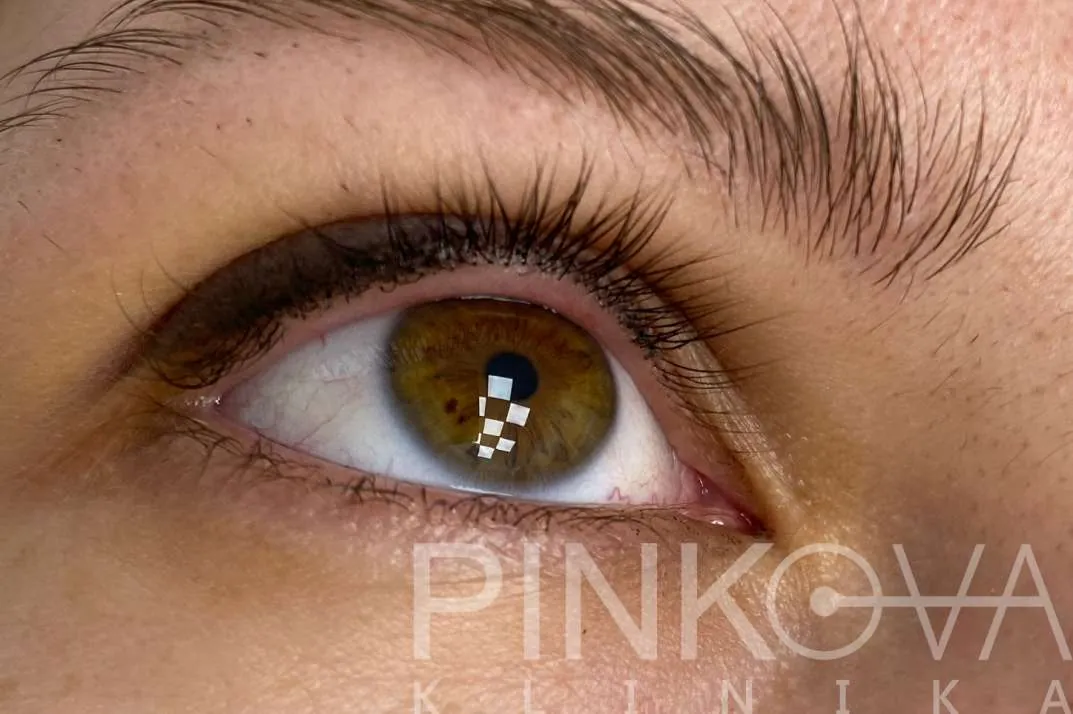
Please note. This is a review of public sources, not medical advice. Individual risk is assessed by the specialist or a doctor.
Complications that are described
A review of ocular and periocular tattoos lists immediate complications – bleeding, infections (conjunctivitis, endophthalmitis), allergic reactions – and delayed ones such as granulomas, which often need treatment. The most serious risk is visual impairment from improper technique or pigment placement [1].
An optometry journal lists further consequences: dermatitis, allergic reactions, granulomas, corneal erosion, loss of meibomian glands, dry eye, loss of eyelashes (madarosis), necrosis of the lid margin, pigment dispersion and scar-related turning-in of the lid; more serious are inadvertent conjunctival pigmentation, lid perforation and tattooing of the cornea. These are mainly linked with cosmetology-based practice [2].
How to lower the risk
- Choose a specialist who understands eyelid and eye anatomy; the review’s authors stress that only qualified professionals should do this [1].
- Ask about sterility, single-use equipment, pigment certificates and what happens if something goes wrong.
- Tell them about dry eye, blepharitis, allergies, contact lenses and past eye surgery.
- Watch yourself afterwards: pain, blurred vision or discharge means seeing a doctor at once.
If you later want to remove the liner by laser, there is one more protective step – eye shields; we cover that in a separate article.
Sources
The statements in this article are backed by these sources (links open in a new window).
- Lee KWA et al. Ocular and periocular tattoo adverse effects: a review. Diagnostics (Basel) 2024Diagnostics (Europe PMC abstract) · Study · 2026-11-06
- Bozung A. Tattoo boo-boo (eyelid tattoo removal complication case). Review of Optometry, 15 January 2025Review of Optometry (trade journal for optometrists) · Unvetted source · 2026-11-06
This information is for general reading and does not replace a consultation with a doctor or specialist.