
How LPG massage works: suction, the skin fold and what is known
It is neither hand stroking nor “beating”: mechanical suction massage has its own physics.
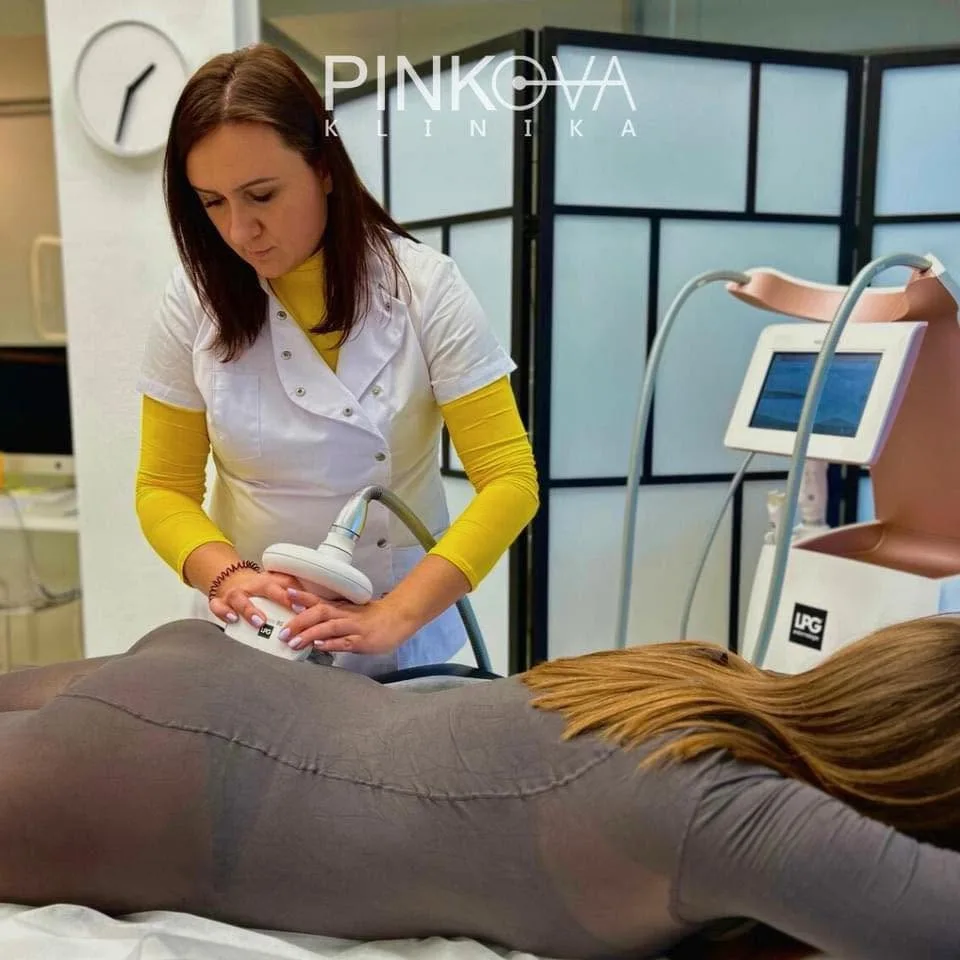
The principle
Vacuum massage is a non-invasive mechanical technique: the device lifts the skin by suction, creates a skin fold and mobilises it [1]. LPG systems use exactly this kind of suction massage with rotating rollers. The specialist guides the head by hand across the body area.
What a review says about tissue changes
A review of the effects of vacuum massage on the skin layers (19 included papers) most often reports two physical effects: softer, less rigid tissue and better skin elasticity. It also describes physiological changes – more fibroblasts and collagen fibres and a change in collagen orientation – and stresses that the effect depends on duration, amplitude and frequency, while the evidence for efficacy itself is, in the authors’ view, thin [1].
How it is measured
In a randomised study, ultrasound after a course of endermologie showed a thinner subcutaneous layer and dermis and a smaller area of fat protrusions at the dermal–subcutaneous junction; in the group of 84 women, those who had endermologie reported the highest satisfaction [2].
Limits and precautions
- It is not a fat-removal procedure: a review of cellulite notes that no treatment guarantees a lasting result [3].
- Not advisable without a doctor’s approval with venous thrombosis, active infection, skin damage or pregnancy – these are general contraindications to massage; the list is confirmed at the consultation.
- The specialist must choose the pressure and session length: studies show that parameters change the tissue response [1].
- Combinations (with wraps or body shaping, for example) are possible by plan, but our sources do not compare such combinations directly.
Sources
The statements in this article are backed by these sources (links open in a new window).
- Moortgat P et al. The physical and physiological effects of vacuum massage on the different skin layers: a current status of the literature. Burns Trauma 2016Burns & Trauma (Europe PMC abstract) · Study · 2026-11-06
- Mlosek RK, Malinowska SP. Using high frequency ultrasound to assess the efficacy of anti-cellulite treatments. Clin Cosmet Investig Dermatol 2025Clinical, Cosmetic and Investigational Dermatology (Europe PMC abstract) · Study · 2026-11-06
- Gabriel A et al. Cellulite: current understanding and treatment. Aesthet Surg J Open Forum 2023Aesthetic Surgery Journal Open Forum (Europe PMC abstract) · Study · 2026-11-06
This information is for general reading and does not replace a consultation with a doctor or specialist.