
Facial mesotherapy: what research shows (and why results differ)
The evidence for mesotherapy is mixed: studies are small and mixtures differ. Here are results of several published works.
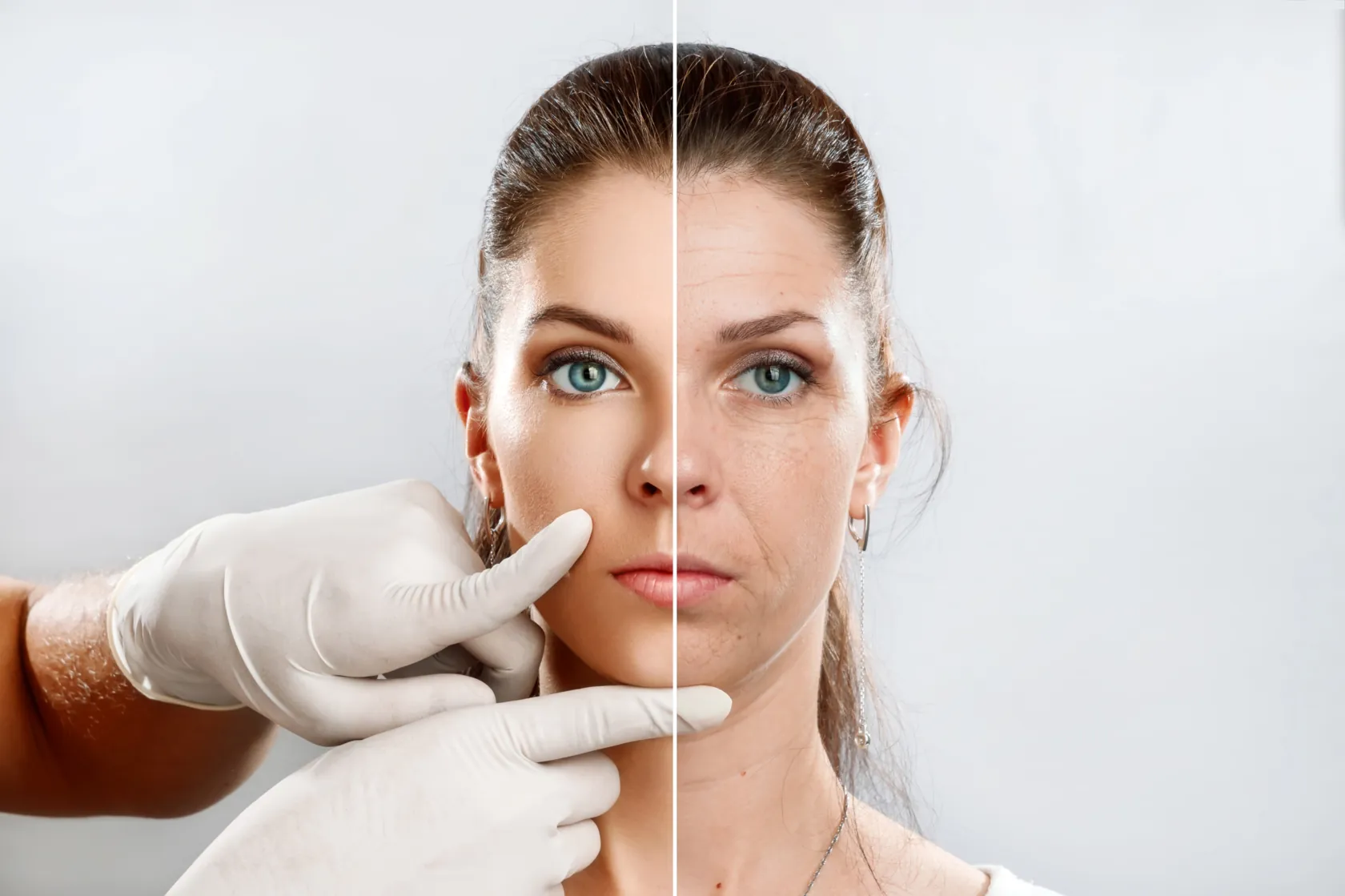
Where improvement was seen
- 50 participants, four sessions 15 days apart with hyaluronic-acid-based mixtures: at 1 and 2 months photographs showed improved brightness, texture and firmness [1].
- 20 women with photoaging on the backs of the hands: hyaluronic acid injected weekly for four weeks; ultrasound showed improvement in 15 of 19 participants [2].
Where it was not seen
10 participants, four sessions at 4-month intervals with a multivitamin and hyaluronic acid solution: no significant clinical or histologic changes at 3 and 6 months [3].
Overall
A review adds that efficacy and safety remain ambiguous, more studies are needed, and a lack of scientific validation is not proof that the method does not work [4].
Two positions on the same method
The expert panel of the Italian Society of Mesotherapy considers intradermal therapy valuable when used correctly and states that efficacy has been shown in some indications, including facial skin ageing [6]. A position paper of the Indian Association of Dermatologists (IADVL) is more cautious: it finds reliable evidence of effectiveness and safety lacking, says many claims rest on anecdotes and advertising, calls the technique controversial, does not recommend routine use and asks for well-designed controlled studies [5]. It also lists complications described in the literature (bruising, swelling, infections, allergic reactions) and notes that ingredients and doses are not standardised [5]. Both documents agree that larger trials are needed; they differ in how much weight they give to the current data.
Newer data (2026)
In a multicentre randomised study of 439 participants, a sodium hyaluronate composite solution for facial rejuvenation gave a 97.56% efficacy rate on the Global Aesthetic Improvement Scale against 3.95% in the control (untreated) group; the authors report a favourable safety profile [7]. The control group received no treatment and the assessment is partly subjective, so this figure does not show how far the improvement exceeds placebo.
In a retrospective study of hair loss, mesotherapy with microneedling improved hair status, best with hyaluronic acid combined with finasteride and latanoprost; improvement was more frequent in women (48%) than in men (29%) [8]. The study is retrospective, with no placebo group.
The result depends on the mixture, technique and skin, so it cannot be guaranteed.
Sources
The statements in this article are backed by these sources (links open in a new window).
- Savoia A et al. A new minimally invasive mesotherapy technique for facial rejuvenation. Dermatol Ther (Heidelb) 2013Dermatology and Therapy (Europe PMC abstract) · Study · 2026-11-06
- Lacarrubba F et al. Mesotherapy for skin rejuvenation: assessment of the subepidermal low-echogenic band by ultrasound evaluation. 2008Journal of Cosmetic Dermatology (Europe PMC abstract) · Study · 2026-11-06
- Amin SP, Phelps RG, Goldberg DJ. Mesotherapy for facial skin rejuvenation: a clinical, histologic, and electron microscopic evaluation. Dermatol Surg 2006Dermatologic Surgery (Europe PMC abstract) · Study · 2026-11-06
- Atiyeh BS, Ibrahim AE, Dibo SA. Cosmetic mesotherapy: between scientific evidence, science fiction, and lucrative business. Aesthetic Plast Surg 2008Aesthetic Plastic Surgery (Europe PMC abstract) · Study · 2026-11-06
- Sarkar R, Garg VK, Mysore V. Position paper on mesotherapy. Indian J Dermatol Venereol Leprol 2011Indian Journal of Dermatology, Venereology and Leprology · Guideline · 2026-11-06
- Mammucari M et al. Mesotherapy, definition, rationale and clinical role: a consensus report from the Italian Society of Mesotherapy. Eur Rev Med Pharmacol Sci 2011European Review for Medical and Pharmacological Sciences (Europe PMC abstract) · Study · 2026-11-06
- Yang R et al. Efficacy and safety of a novel sodium hyaluronate composite solution via mesotherapy for facial rejuvenation: a multicenter randomized controlled study. Plast Reconstr Surg Glob Open 2026Plastic and Reconstructive Surgery Global Open (Europe PMC abstract) · Study · 2026-11-06
- Behrangi E et al. Efficacy and safety of microneedling combined with mesotherapy for androgenic alopecia: a retrospective study comparing four treatment protocols. Health Sci Rep 2026Health Science Reports (Europe PMC abstract) · Study · 2026-11-06
This information is for general reading and does not replace a consultation with a doctor or specialist.