
Tattoo removal risks and skin type
Lasers are the standard of care for removal, but not risk-free. It is worth knowing the risks beforehand.
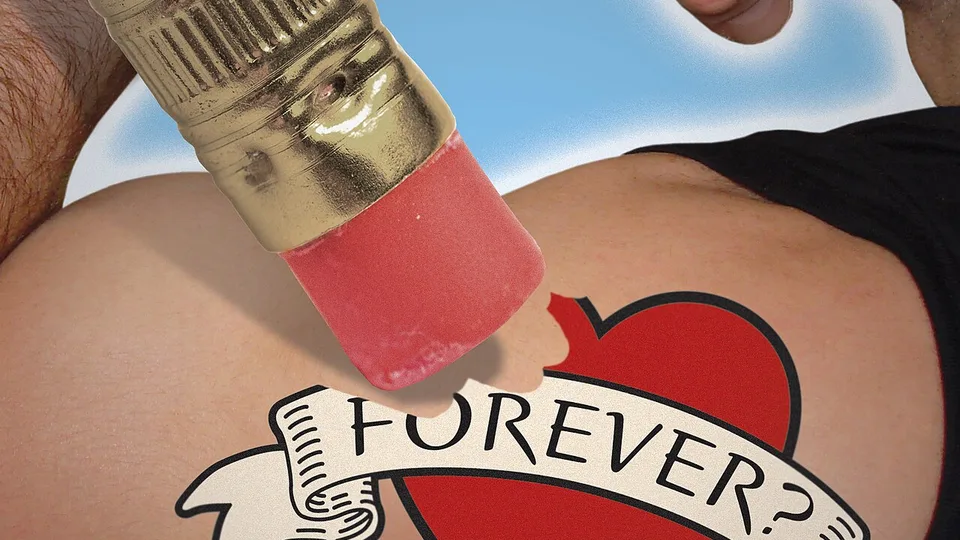
Possible risks
Mayo Clinic: scarring is likely after most removal methods, infection is possible, skin discolouration is possible, and some scarring or colour variation may remain [1]. The FDA adds that keloids may be more likely after removal [2].
Skin type
Mayo Clinic: a Q-switched Nd:YAG laser may be used on darker skin to reduce the risk of permanently changing skin pigment [1]. A review notes that the patient’s skin type changes the odds of a satisfactory result [3].
Before the procedure
Mayo Clinic advises consulting a dermatologist, asking how ink type and skin tone affect the choice of method, and not attempting removal yourself [1].
Which complications are described
A review of laser procedures lists complications from expected short-term reactions to late pigment change, scarring and eye injury. The causes are an unsuitable device or settings, insufficient patient assessment and limited operator experience [4].
What tattoo-removal studies show
In the systematic review, adverse events were mostly mild and short-lived, chiefly pigment change [5].
An interesting fact: how Germany regulates it
The article notes that in Germany the use of non-ionising radiation on people is governed by a dedicated regulation (NiSV), and the German Dermatological Society for Laser Medicine keeps a registry of complications [4].
Tell the specialist if you tend to form keloids or scars.
Sources
The statements in this article are backed by these sources (links open in a new window).
- Tattoo removalMayo Clinic · Guideline · 2026-11-06
- Tattoos & Permanent Makeup: Fact SheetU.S. Food and Drug Administration · Authority · 2026-11-06
- Hernandez L et al. Laser tattoo removal: laser principles and an updated guide for clinicians. Lasers Med Sci 2022Lasers in Medical Science (Europe PMC abstract) · Study · 2026-11-06
- Nguyen L et al. Complications of laser and energy-based procedures in dermatology: classification, management, and prevention. J Dtsch Dermatol Ges 2026Journal der Deutschen Dermatologischen Gesellschaft (Europe PMC abstract) · Study · 2026-11-06
- Wong J et al. Efficacy of Nd:YAG lasers for tattoo removal: systematic review of clinical outcomes, clearance rates, and treatment parameters. J Cosmet Dermatol 2026Journal of Cosmetic Dermatology (Europe PMC full text) · Study · 2026-11-06
This information is for general reading and does not replace a consultation with a doctor or specialist.