
Pigment spots on the skin: where they come from
Pigment spots are not one condition. Before choosing a treatment, it helps to understand what causes them.
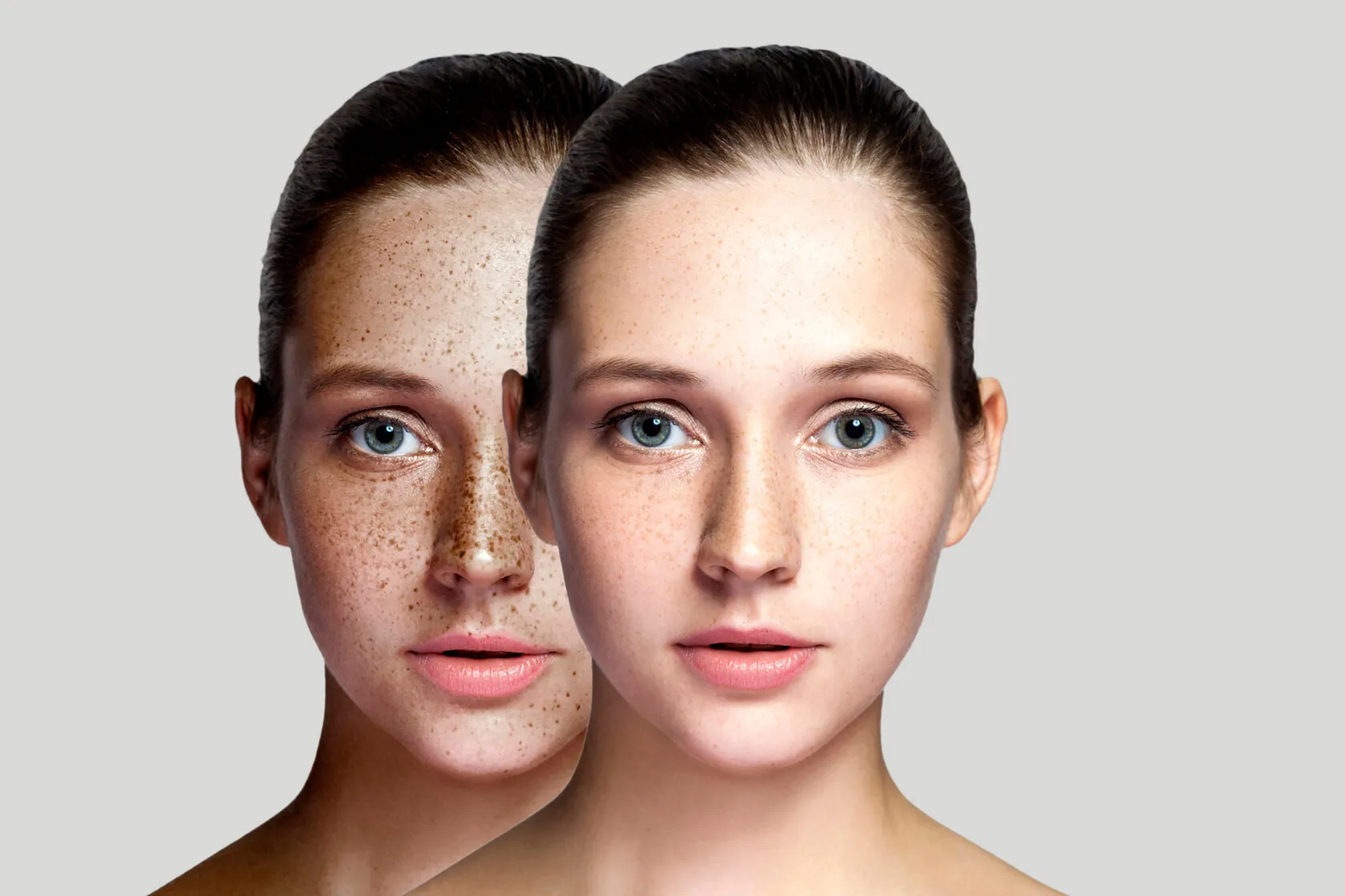
Melasma: known triggers
The AAD says melasma can be triggered by sun exposure, which activates pigment-producing cells, as well as pregnancy, stress, an underlying medical condition and certain medicines such as oral contraceptives; it may be more noticeable in darker skin [1]. A review adds sex hormones, skin inflammation, cosmetics and photosensitising drugs, and over 40% of patients reported affected relatives [2].
Who gets it more often
Melasma affects women more often, and people with more pigmented skin types (Fitzpatrick III–V) [2].
Why it is hard to treat
A review of clinical trials notes that because of its dermal component and tendency to relapse, melasma is often difficult to treat, and broad-spectrum (UVA + UVB) sunscreen is important [3]. The AAD adds that it may fade on its own but lasts for years in some people, and that treatments take time [1].
Not just ultraviolet
A 2026 review states that conventional UVB/UVA protection may not be enough: UVA1 radiation and blue light (380–455 nm) also drive hyperpigmentation, especially in Fitzpatrick types IV–VI [4].
Darker skin and the myth of being “protected”
Darker skin holds more melanin and is naturally better protected, which has led to a misconception that it is shielded from all sun damage. The review stresses that visible light and UVA1 are significant contributors to pigment change, and that the main forms are melasma and post-inflammatory hyperpigmentation [5].
The nature of a spot is determined by a doctor or specialist at an assessment; this text is general information.
Sources
The statements in this article are backed by these sources (links open in a new window).
- Melasma: self-careAmerican Academy of Dermatology · Guideline · 2026-11-06
- Handel AC, Miot LD, Miot HA. Melasma: a clinical and epidemiological review. An Bras Dermatol 2014Anais Brasileiros de Dermatologia (Europe PMC abstract) · Study · 2026-11-06
- Gupta AK et al. The treatment of melasma: a review of clinical trials. J Am Acad Dermatol 2006Journal of the American Academy of Dermatology (Europe PMC abstract) · Study · 2026-11-06
- Azevedo B, Lorigo M, Cairrao E. The influence of sunscreen use on skin pigmentation disorders: melasma, post-inflammatory hyperpigmentation, and vitiligo. Curr Issues Mol Biol 2026Current Issues in Molecular Biology (Europe PMC abstract) · Study · 2026-11-06
- Leybengrub P et al. Beyond melanin: a literature review of photoprotection mechanisms and gaps in skin of color. Cureus 2026Cureus (Europe PMC abstract) · Study · 2026-11-06
This information is for general reading and does not replace a consultation with a doctor or specialist.