
Who laser hair removal suits — and who it suits less
The result of laser hair removal depends most on how strongly hair colour differs from skin colour. Here is what medical bodies and studies say.
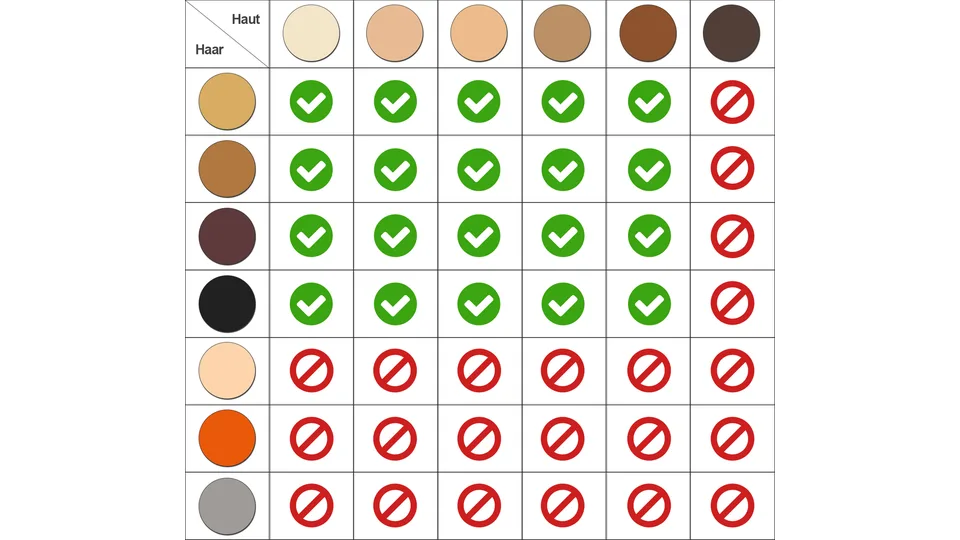
Hair and skin colour
The AAD notes that laser hair removal works best on people with light skin and dark hair [1]. Mayo Clinic gives the same picture: dark hair responds best, while the method is less effective on blond, white, gray or red hair [2].
That does not mean darker skin is excluded: a literature review concludes that all skin types can be treated, with fair skin and dark hair the ideal case [3], and a comparison of devices found the Nd:YAG laser the best choice for pigmented skin [4].
Pigment changes
Mayo Clinic lists skin colour changes among the risks, with a higher chance in people with Black or brown skin and when skin is exposed to sun [2]. In a study of adverse effects, pigment changes were reported in up to 19% with shorter-wavelength lasers versus 2–3% with Nd:YAG; overall, side effects were rated as low [5].
What lasers do not solve
- The cause of hormone-related hair growth — the laser treats hair, not hormones [2].
- Eyelids and eyebrows, and tattooed skin — Mayo Clinic does not list them as suitable areas [2].
What to tell your specialist
The AAD advises mentioning isotretinoin and other medicines (including aspirin), a history of cold sores, a tendency to scar or form keloids, and a recent tan [6].
Darker skin: what the reviews say
A review of non-invasive procedures for Fitzpatrick skin types IV–VI says people with darker skin are at higher risk of hyper- and hypopigmentation, that the long-pulsed 1064 nm Nd:YAG laser is the gold standard for hair removal, and that intense pulsed light (IPL) devices for hair removal should be avoided in this group [7].
Why assessment and experience matter
A review of complications reminds us that problems arise from an unsuitable device, settings, insufficient patient assessment or limited operator experience [8]. So before starting it is worth asking which device and wavelength suit your own skin type.
Suitability is always judged by a specialist at an assessment; this article is general information.
Sources
The statements in this article are backed by these sources (links open in a new window).
- Laser hair removal: FAQsAmerican Academy of Dermatology · Guideline · 2026-11-06
- Laser hair removalMayo Clinic · Guideline · 2026-11-06
- Ibrahimi OA et al. Laser hair removal. Dermatol Ther 2011Dermatologic Therapy (Europe PMC abstract) · Study · 2026-11-06
- Gan SD, Graber EM. Laser hair removal: a review. Dermatol Surg 2013Dermatologic Surgery (Europe PMC abstract) · Study · 2026-11-06
- Lim KH, Lanigan SW. A prospective study of adverse effects of hair removal lasers. Lasers Med Sci 2006Lasers in Medical Science (Europe PMC abstract) · Study · 2026-11-06
- Laser hair removal: How to prepareAmerican Academy of Dermatology · Guideline · 2026-11-06
- Lee SS et al. Noninvasive cosmetic treatments for Fitzpatrick IV-VI: a narrative review of safety and efficacy guidelines. Plast Reconstr Surg Glob Open 2026Plastic and Reconstructive Surgery Global Open (Europe PMC abstract) · Study · 2026-11-06
- Nguyen L et al. Complications of laser and energy-based procedures in dermatology: classification, management, and prevention. J Dtsch Dermatol Ges 2026Journal der Deutschen Dermatologischen Gesellschaft (Europe PMC abstract) · Study · 2026-11-06
This information is for general reading and does not replace a consultation with a doctor or specialist.